Business model
A multi-sided marketplace with explicit seller and supplier systems.
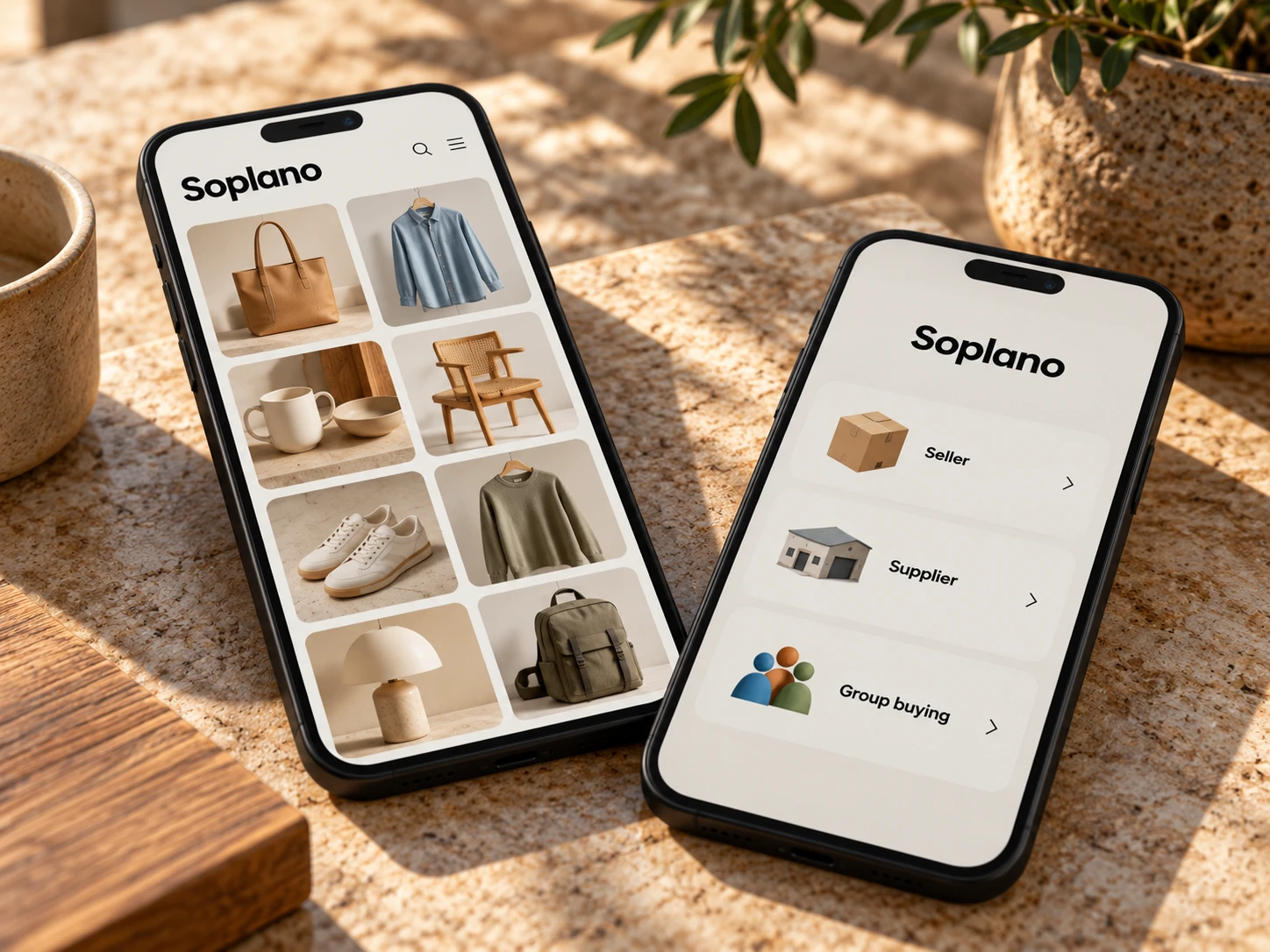
A social marketplace designed around the different ways people sell, supply, buy together and operate stores.
Founder-led · Evolving
Social selling is fragmented across conversations, informal supplier relationships and disconnected storefront tools.
New sellers often need inventory, capital and operational knowledge before they can begin.
Suppliers and groups need distinct workflows, but most marketplaces compress every participant into one generic account model.
Seller Mode gives merchants a focused environment for presenting and operating their commerce activity.
Supplier Mode creates a separate supply-side experience instead of treating suppliers as ordinary sellers.
Group buying coordinates shared demand, while the Hands-Free Store model explores selling without conventional inventory ownership.
Framed the opportunity and business model across a multi-sided marketplace.
Defined the participation modes, product journeys and relationships between sellers, suppliers and buyers.
Connected product architecture, interface direction, implementation decisions and launch strategy into one system.
A private founder-led product in active evolution. This case study focuses on the product and system decisions without implying a public launch.
Buyers, sellers, suppliers and groups enter through role-aware journeys.
Focused operating environments keep each actor's work understandable.
Demand, supply and store activity connect inside one product system.
Launch and operating logic are considered alongside the interface.
A multi-sided marketplace with explicit seller and supplier systems.
Distinct modes, group-buying mechanics and a Hands-Free Store proposition.
Commerce, supply, identity and participation designed as connected layers.
Founder · Product Architect · Software Engineer
Multi-sided marketplace, Role-aware journeys, Commerce workflows
Application architecture, Data and permissions, Responsive product interface
Business model, Go-to-market thinking, Operating model